


Royal Lineage
The living thread of Hawaiʻi’s monarchy

L-R: Prince David Klaren Laʻamea Kaumualiʻi Kawānanakoa, Princess Abigail Kinoiki Kekaulike Kawānanakoa
Princess Abigail Kinoiki Kekaulike Kawānanakoa was more than a royal descendant, she was the living embodiment of an unbroken line of aliʻi who shaped the political, spiritual, and cultural foundation of Hawaiʻi. Her ancestry forms a remarkable web of genealogical depth and island-spanning relationships, reaching back through centuries of sacred alliances and sovereign rulership.
Kumu Manu Boyd describes the moʻokūʻauhau (genealogy) of the Kawānanakoa family as a royal lineage that traces its connection to all of the major Hawaiian Islands: Hawaiʻi, Maui, Oʻahu, and Kauaʻi.
She was the great-granddaughter of Princess Mary Kinoiki Kekaulike, once Governor of Hawaiʻi Island and youngest sister to Queen Kapiʻolani, and of High Chief David Kahalepoʻuli Piʻikoi, son of Jonah Piʻikoi, who rose from humble origins as the pipe-lighter of King Kaumualiʻi to become a respected statesman of the Kingdom.
She descended from Abigail Kuaihelani Maʻipinepine Campbell, a political leader and aliʻi who stood beside Queen Liliʻuokalani during Hawaiʻi’s most turbulent era, and from James Campbell, the plantation magnate whose fortune would later fuel political resistance and community restoration.
She was the great-great-great-granddaughter of King Kaumualiʻi, the last sovereign ruler of Kauaʻi, and a first cousin, four generations removed, from King Kalākaua, Queen Liliʻuokalani, Princess Likelike, and Prince Leleiohoku the famed Nā Lani ʻEhā, or “The Heavenly Four.”
She was the cherished granddaughter of Prince David Kawānanakoa, the constitutional heir designated by King Kalākaua, and of Princess Abigail Wahīikaʻahuʻula Campbell Kawānanakoa, who hānai-adopted her in the sacred tradition of punahele. In Hawaiian culture, a punahele is not merely a favored child, but one set apart lovingly chosen to be elevated within the household and prepared for roles of deep kuleana. Through this ceremonial adoption, Abigail was raised not only as a descendant, but as an heir of presence and protocol nurtured in the spiritual, ceremonial, and cultural rites of the aliʻi, so that she might carry forward their legacy in dignity and devotion.
And she was the daughter of Princess Lydia Liliʻuokalani Kawānanakoa, a cultural matriarch and the founding president of the Friends of ʻIolani Palace, whose civic devotion shaped her daughter’s life of service.
Her lineage is not just one of prestige, it is one of service, sacrifice, and continuity.
It threads through the most sacred lines of ancient Kauaʻi, royal Hawaiʻi Island, and modern constitutional succession, placing Abigail at the center of a royal genealogy without parallel in the Kingdom’s final chapter.
A Royal Web of Connections
-
Great-granddaughter of Princess Mary Kinoiki Kekaulike (Governor of Hawaiʻi Island) and High Chief David Kahalepoʻuli Piʻikoi son of Jonah Piʻikoi, former pipe-lighter of King Kaumualiʻi
-
Great-granddaughter of Abigail Kuaihelani Maʻipinepine Campbell, aliʻi and political leader, and James Campbell, plantation magnate and founder of the Campbell Estate
-
Great-great-great-granddaughter of King Kaumualiʻi, sovereign of Kauaʻi
-
Great-grandniece of King David Kalākaua, Queen Kapiʻolani, and Queen Liliʻuokalani
-
Granddaughter of Prince David Kawānanakoa, named heir to the throne by Kalākaua, and Princess Abigail Wahīikaʻahuʻula Campbell Kawānanakoa, who adopted her in the punahele tradition to carry the royal line forward
-
Daughter of Princess Lydia Liliʻuokalani Kawānanakoa, cultural leader and founding president of The Friends of ʻIolani Palace
The Royal House of Kawānanakoa
A constitutional heir, a royal legacy, and its chosen protector.
Abigail was born into one of the most significant aliʻi families of the Hawaiian Kingdom — a family that stood not only as descendants of the Kalākaua Dynasty, but as the designated heirs to the Hawaiian throne.
She was the eldest granddaughter of His Royal Highness Prince David Laʻamea Kaluaonalani Kahalepoʻuli Piʻikoi, who was formally named heir to the throne by King Kalākaua pursuant to the royal constitution. Upon being granted the royal surname Kawānanakoa, Prince David became the patriarch of the House that would carry on the monarchy’s legacy even after the overthrow of the Kingdom in 1893. In this lineage, he was not only a constitutional successor he was a cultural cornerstone.
Abigail was born on April 23, 1926, to Princess Lydia Liliʻuokalani Kawānanakoa and William Jeremiah Ellerbrock. Her aliʻi lineage came directly through her mother, who was herself the daughter of Prince David Kawānanakoa and Princess Abigail Kuaihelani Campbell Kawānanakoa — the latter a powerful and politically savvy figure in her own right.
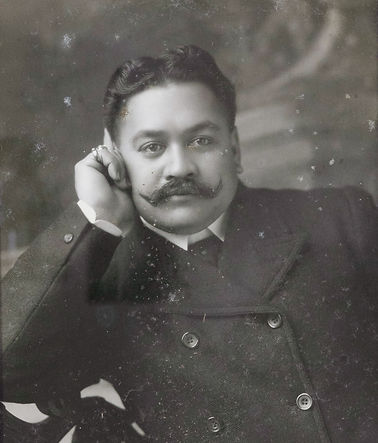
Prince David Kawānanakoa
Malu Hānai and the Punahele Tradition
Shortly after her birth, young Abigail was formally hānai (adopted) by her maternal grandmother in the traditional Hawaiian practice of malu hānai. This was not a casual arrangement it was a sacred generational elevation, in which the child is symbolically and ceremonially placed in the same generation as the elder, often for the purpose of preparing an heir.
Princess Abigail was thus raised not as a granddaughter, but as a punahele, a favored daughter, groomed with intention to perpetuate the royal line. She grew up within the regal atmosphere of Hawaiian nobility, surrounded by courtly traditions, cultural protocols, and the living presence of Hawaiʻi’s royal past.
“Malu hānai” served not only to protect her, but to prepare her.
Through this sacred adoption, she was imbued with both lineal legitimacy and practical kuleana, the duties of care, leadership, and protection of Hawaiian culture.

A Legacy of Noblesse Oblige
Abigail’s upbringing was unique not only for its royal setting, but for the depth of cultural responsibility instilled in her from an early age. She was educated in aliʻi protocol and mentored in the responsibilities of stewardship, guardianship, and humility.
She considered her role not a privilege, but a duty. She often spoke of her position as a matter of noblesse oblige, the belief that with great status comes even greater responsibility to serve others. She internalized this belief, not as a slogan, but as a way of life.
The Keeper of the Line
As the senior representative of the Royal House of Kawānanakoa and the most visible living heir of the Kalākaua Dynasty, Abigail carried the weight of Hawaiʻi’s monarchy into the modern world. She did not claim a political throne, but she held something just as important: the dignity of the aliʻi, the memory of the Kingdom, and the authority of a royal line that never disappeared, but adapted.
She stood at the intersection of past and present, the embodiment of the Kingdom’s royal legacy, its constitutional lineage, and its continued cultural presence.
Princess Abigail Wahīikaʻahuʻula Campbell Kawānanakoa
The Kalākaua Dynasty
The Line of Light and the Roots of the Royal House of Kawānanakoa.
The Royal House of Kawānanakoa, through Abigail, stands as the closest living blood connection to the ruling line of King David Kalākaua and Queen Kapiʻolani, Hawaiʻi’s last reigning monarchs before the overthrow of the Kingdom.
This connection is not metaphorical. It is direct, ancestral, and sacred — rooted in generations of aliʻi whose lives intertwined in political leadership, ceremonial lineage, and familial devotion. At its heart is a shared descent from a powerful constellation of chiefly lines that spans the islands of Hawaiʻi, Maui, Oʻahu, and Kauaʻi.
Shared Ancestry Through High Chiefess Pelakila Kamokuiki
The link between Abigail’s lineage and the Kalākaua Dynasty begins with High Chiefess Pelakila Kamokuiki, the paternal grandmother of King Kalākaua and also a direct ancestor of Abigail.
-
Pelakila Kamokuiki was the daughter of Kanepawale and Uaua-a-ʻI, and she married twice.
-
Her first marriage, to High Chief Alapaʻimaloiki (also known as Alapaʻikupalumano), produced a daughter named Kekahili, known as “The Royal Standard.”
-
Kekahili later married High Chief Jonah Piʻikoi, with whom she had David Kahalepoʻuli Piʻikoi the father of Prince David Kawānanakoa.
The name “Kahalepoʻuli” — meaning “The Darkened House” — commemorates the shuttered home of High Chiefess Kinaʻu, who darkened her residence due to an eye affliction. This same moment in Hawaiian royal life is echoed in the names given to Queen Liliʻuokalani: Liliʻu Loloku Walania Wewehi Kaukaualiʻi.
Ties to Queen Kaʻahumanu and Kamehameha’s Inner Circle
The Piʻikoi line further strengthens its standing through its connection to Queen Kaʻahumanu, the Kuhina Nui (Premier) of the Hawaiian Kingdom and favored wife of King Kamehameha I.
-
Kekahili, Princess Abigail’s ancestor, was a first cousin to Kaʻahumanu.
-
Kekahili’s father, Alapaʻimaloiki, was the younger brother of Keʻeaumoku Papaʻiaheahe, Kaʻahumanu’s father and a key general of Kamehameha I.
-
Both were sons of High Chief Keawepoepoe and Kumaʻaiku, giving them exceptional aliʻi status from birth.
The Line of Kalākaua and Liliʻuokalani
Pelakila Kamokuiki’s second marriage, to High Chief Kamanawa II, produced Caesar Kapaʻakea, who married Analea Keohokālole. Together, they became the parents of Kalākaua, Liliʻuokalani, and their siblings establishing the ruling family of the Hawaiian Kingdom’s final years.
Through this shared ancestry, Abigail and the Kalākaua siblings are cousins in the first degree, connected through generations of sacred and strategic intermarriage.
Nā Lani ʻEhā — The Heavenly Four
The Kalākaua siblings — known collectively as Nā Lani ʻEhā (The Heavenly Four)* were:
-
James Kaliokalani (Hānai of ʻAikanaka) – May 29, 1835 – April 2, 1852
-
King David Kalākaua* (Hānai of Haʻaheo Kaniu) – November 16, 1836 – January 20, 1891
-
Queen Liliʻuokalani* (Hānai of Pākī and Konia) – September 2, 1838 – November 11, 1917
-
Anna Kaʻiulani – b. 1842
-
Kaʻiminaʻauao (Hānai of Kamehameha III) – November 7, 1845 – November 10, 1848
-
Princess Miriam Kapili Likelike* – January 13, 1851 – February 2, 1887
-
Prince William Pitt Leleiohoku II* (Hānai of Keʻelikōlani) – January 10, 1855 – April 9, 1877
While this lists additional siblings (James Kaliokalani, Anna Kaʻiulani, Kaʻiminaʻauao), those three are not always included in the canonical use of “Nā Lani ʻEhā” as it’s traditionally understood.
A First Cousin, Four Generations Removed
Abigail is a first cousin, four generations removed from:
-
His Majesty King David Kalākaua
-
Her Majesty Queen Liliʻuokalani
-
Princess Likelike
-
Prince Leleiohoku
Her connection runs not only through shared blood but through carefully preserved names, alliances, and genealogical sanctity.
As heir to the Kawānanakoa line, the designated constitutional successors to the throne, Abigail carried the blood, the mana, and the ceremonial authority of the Kalākaua Dynasty into the 21st century.
The Piʻikoi Lineage
From pipe-lighter to princes, a legacy of loyalty and nationhood
At the heart of the Royal House of Kawānanakoa lies the Piʻikoi lineage, a powerful thread of aliʻi heritage that connects Hawaiʻi’s monarchy to both Kauaʻi’s ancient nobility and the constitutional leadership of the modern Kingdom. Through this line, Princess Abigail inherited not only noble blood but a legacy of public service, political ascendancy, and familial devotion.
High Chief Jonah Piʻikoi
From humble beginnings to high council.
The esteemed lineage of the House of Piʻikoi begins with High Chief Jonah Piʻikoi, a kaukaualiʻi (lesser-ranking chief) of Kauaʻi whose life bridged the sacred realm of aliʻi service and the emergent governance of the Hawaiian Kingdom. Born into a noble yet modest chiefly line, Piʻikoi’s early distinction came not from birth alone, but from the trust he earned at the side of King Kaumualiʻi, the last sovereign monarch of Kauaʻi.
As personal attendant and pipe-lighter to King Kaumualiʻi, Piʻikoi held a position of rare intimacy and confidence. In Hawaiian court tradition, the lighting and tending of the aliʻi’s pipe was not a menial task entrusted only to those who had demonstrated discretion, humility, and unwavering loyalty.
Following the peaceful unification of Kauaʻi with the rest of the Hawaiian Islands under Kamehameha I, Piʻikoi continued to ascend in stature, guided by a deep sense of kuleana. He would go on to serve as a member of the House of Nobles and a trusted advisor within King Kamehameha III’s Privy Council. Through these roles, he helped shape the emerging legal and constitutional structures of the 19th-century Kingdom of Hawaiʻi, lending his voice and vision to a monarchy in transition.
His life later chronicled in his own memoirs exemplifies the passage from personal devotion to public leadership, and from intimate aliʻi service to the foundations of Hawaiian self-governance. He stands as a dignified reminder that royal proximity, when met with honor, can shape generations to come.
Through his union with High Chiefess Kekahili, Piʻikoi fathered High Chief David Kahalepoʻuli Piʻikoi, whose descendants would form the heart of the Kawānanakoa royal line — including Princes David, Jonah Kūhiō, and Edward. In this way, the legacy of the humble pipe-lighter lives on in the highest ranks of Hawaiian nobility.
Marriage to High Chiefess Kekahili
Joining two powerful lines.
Jonah Piʻikoi married High Chiefess Kekahili, herself a direct descendant of High Chief Alapaʻimaloiki, and cousin in the first degree to Queen Kaʻahumanu, the Kuhina Nui (Premier) of the Kingdom and favored wife of Kamehameha I.
Together, they had one son: High Chief David Kahalepoʻuli Piʻikoi. His given name Kahalepoʻuli, or “The Darkened House” honors the seclusion of High Chiefess Kinaʻu, whose home was once darkened to ease the pain of her eye affliction. The same moment in aliʻi memory also lives in the long name of Queen Liliʻuokalani, whose given names Liliʻu Loloku Walania Wewehi Kamakaʻeha carry its poetic echo.
A Sacred Union and Royal Offspring
David Kahalepoʻuli Piʻikoi became the consort of his adopted sister, Princess Mary Kinoiki Kekaulike, the niau piʻo (high-ranking) daughter of High Chief Kuhio Kalanianaʻole of Hilo and High Chiefess Kinoiki-I of Kauaʻi, a line descended directly from King Kaumualiʻi and his sister-wife Kapuaʻamohu.
-
Mary Kinoiki Kekaulike was also the youngest sister of Queen Kapiʻolani, who later became Queen Consort to King Kalākaua.
-
She was hānai-adopted by Jonah Piʻikoi, further reinforcing the intertwining of familial and royal lines.
-
From the union of David Kahalepoʻuli Piʻikoi and Princess Mary Kinoiki Kekaulike came three sons, each of whom would leave a mark on Hawaiʻi’s royal and political legacy:
-
The Three Princes of the Piʻikoi Line
-
Prince David Laʻamea Kaluaonalani Kawānanakoa
-
Surnamed Kawānanakoa by royal decree, named heir to the throne by King Kalākaua
-
Founder of the Royal House of Kawānanakoa
-
-
Prince Edward Kealiʻiahonui
-
Named in honor of a high-ranking Kauaʻi aliʻi and linked through his name to the Kaumualiʻi legacy
-
-
Prince Jonah Kūhiō Kalanianaʻole
-
Later elected as Hawaiʻi’s delegate to the U.S. Congress
-
Architect of the Hawaiian Homes Commission Act, a foundational piece of Native Hawaiian policy
-
Through the Piʻikoi line, Abigail inherited not only her royal legitimacy, but a profound sense of civic kuleana, one carried by her uncles and rooted in generations of aliʻi service.
These are not just ancestral names, they are nation builders, lawgivers, and guardians of the Hawaiian people. The Piʻikoi lineage stands as one of the most consequential in the history of the Hawaiian Kingdom, and Princess Abigail was its proud descendant and living representative.
The Kaumualiʻi Lineage
The legacy of Kauaʻi’s last king, carried forward in the House of Kawānanakoa.
Among the many noble lines that converge in Abigail, none is more storied or symbolically significant than her descent from King Kaumualiʻi, the final sovereign of an independent Kingdom of Kauaʻi. His peaceful unification with Kamehameha I was not a surrender, but a strategic act of diplomacy that ensured the protection of his people and preserved their legacy, a legacy passed down through his descendants and ultimately embodied in Abigail.
A Namesake and a Heirloom Line
Abigail was named in honor of her great-grandmother, HRH Princess Mary Kinoiki Kekaulike, the youngest of three powerful sisters:
-
Queen Kapiʻolani, who would marry King Kalākaua and become Queen Consort of Hawaiʻi
-
Princess Virginia Kapoʻoloku Poʻomaikelani
-
Princess Mary Kinoiki Kekaulike, mother of the Kawānanakoa brothers and direct ancestor of Princess Abigail
All three women were the daughters of High Chief Kuhio Kalanianaʻole of Hilo and High Chiefess Kinoiki-I, the niau piʻo daughter of King Kaumualiʻi and his sister-wife High Chiefess Kapuaʻamohu. This type of sibling union, niau piʻo, was the highest form of chiefly marriage, considered sacred and reserved for the preservation of divine bloodlines.
Their mother, Kinoiki-I, was herself the child of Queen Kamakahelei, the hereditary ruler of Kamawaelualani, the ancestral name for Kauaʻi.
Through this lineage, Princess Abigail was the great-great-great-granddaughter of King Kaumualiʻi, inheriting not only royal descent but a legacy of political foresight and cultural resilience.
Ties to the House of Piʻikoi
In a union that bound two high-ranking lines together, Princess Mary Kinoiki Kekaulike was hānai (adopted) by High Chief Jonah Piʻikoi, who had once served as pipe-lighter and personal attendant to King Kaumualiʻi himself. This act of hānai was both symbolic and strategic — cementing political bonds and ensuring continuity within the aliʻi class.
She later married High Chief David Kahalepoʻuli Piʻikoi, Jonah’s son, and together they became the parents of three princes who would shape modern Hawaiian history:
-
HRH Prince David Laʻamea Kaluaonalani Piʻikoi, later surnamed Kawānanakoa, heir to the throne and patriarch of the Kawānanakoa line
-
HRH Prince Edward Kealiʻiahonui, whose name echoed the noble line of Kauaʻi
-
HRH Prince Jonah Kūhiō Kalanianaʻole, a future statesman and reformer, remembered for championing the rights of Native Hawaiians in the Territorial era
Through her Kaumualiʻi ancestry, Princess Abigail was not only a descendant of kings, but of strategic alliance-makers, individuals who preserved power through intellect, diplomacy, and cultural stewardship.
In this way, her lineage reflects the fullest arc of aliʻi history from ancient rule to modern advocacy, from the sacred lines of Kauaʻi to the constitutional heirship of the Kingdom of Hawaiʻi.
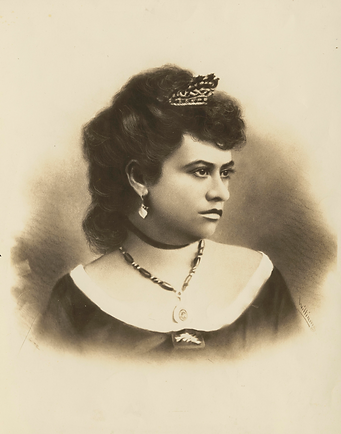
Princess Kinoiki Kekaulike II, mother of Prince David Kawānanakoa, Prince Edward Abnel Keliʻiahonui, and Prince Jonah Kūhiō Kalanianaʻole. She was the sister of Queen Kapiʻolani and a descendant of King Kaumualiʻi, the final reigning sovereign of Kauaʻi. Hawaiʻi State Archives