


Kekau
The Personal Side of a Princess

Photo: Hawaiʻi State Archives
Childhood and Education
Abigail spent long stretches of her childhood in Punaluʻu at the beachside home of her great-aunt, Muriel Campbell Shingle Amalu the place she would later describe as her most cherished childhood home.
These early years unfolded against the backdrop of a Hawaiʻi caught between worlds. The 1920s brought prosperity for a privileged few, which included her family, while the foundations of plantation power still governed much of daily life. At the same time the islands were still grappling with the overthrow of their kingdom just 27 years prior, and the aliʻi legacy in Abigail’s household remained a living testament to a people whose sovereignty had been extinguished just a generation before.
During the late 1930s, while her mother, Liliʻuokalani Morris, and stepfather, war correspondent Clark Lee, were stationed in Asia covering the Japan–China War, young Abigail attended the American School in Shanghai. Immersed in a cosmopolitan city shaped by political tension and rapid change, she witnessed the shifting balance between East and West, an experience that broadened her worldview and deepened her awareness of global affairs. This period also unfolded against the backdrop of the Great Depression, which continued to rattle the economic foundations of Hawaiʻi and the wider world.
Abigail attended Punahou School in Honolulu, then Notre Dame College in Belmont, California, and later returned home in the early 1940s to attend the University of Hawaiʻi. By this time global conflict had reached the islands, transforming them into a strategic United States military outpost.
When her grandmother passed away in 1945, it was nineteen-year-old Abigail, then referred to formally as “Kekaulike”, who unveiled the royal portrait that would hang in ʻIolani Palace.
From 1945 to 1947, she worked briefly at the Hawaiʻi State Legislature before discovering her true calling: ranching. Most of her early work was centered at her home in Kahuku, where she trained horses and built a herd of high-grade cattle.
“Horses were one thing that was all mine,” she told Robbie Alm. “It’s one thing that I don’t owe any of the success to anyone but me.”
In a 1970 interview for Honolulu magazine, writer Laurie Hover recalled the young princess, then affectionately known as “Kiki”, with warmth and fondness:
“A little towhead in faded sailamokus and shirt tied a-midriff, she somersaulted on the lawn with the other small fry… There was Kiki hunting ecrevisse, the tasty little fresh water shrimp that inhabit Hawaiʻi’s mountain streams… Kiki sliding recklessly down cane flumes… Kiki throwing ripe guavas that generally found their mark.”
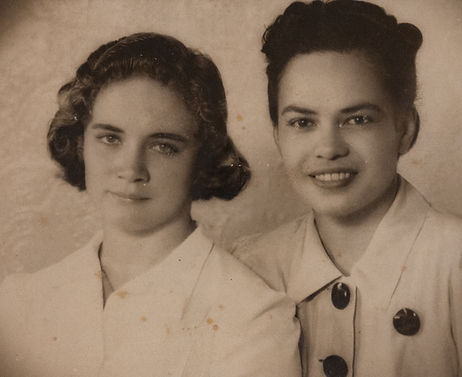
L-R: Abigail and birth mother HRH Princess Lydia Liliʻuokalani Kawānanakoa
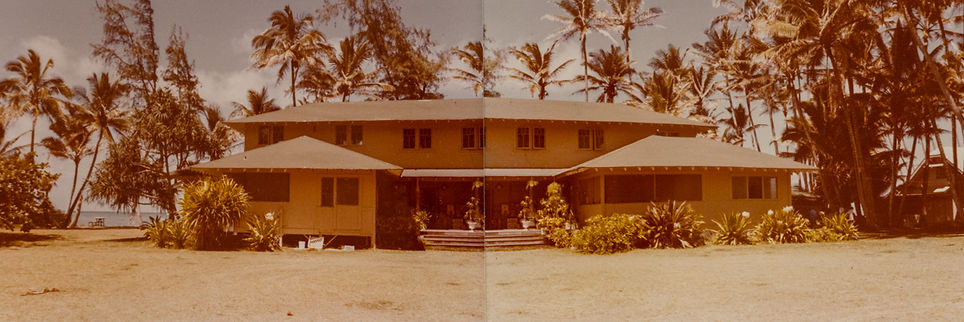
Punaluʻu home
She once described these intimate memories with vivid clarity:
“We would get up early and ride horseback to the mountains to pick rice bags full of ginger buds. Then come back, swim the horses, and spend the rest of the day stringing leis on the lanai.”
She credited the women in her life, her grandmother’s sisters, aunties, and cousins as central to her formation:
“They were gracious, charming people who had beautiful homes and heirlooms and time for us children.”
In 1979, following the passing of her Aunt Muriel, Abigail repurchased and renovated the beloved Punaluʻu house:
“It hurt me to see the Punaluʻu place deteriorate after Muriel’s death,” she said. “I felt that if I could bring it back to its original grandeur, a little of those magical days of my youth would return.”
“I’m glad I have Punaluʻu,” she later reflected. “When I go there and close its gates, for a small moment in time I drift back to the beautiful summer days (of my youth) and to a most beautiful and kind lady, Auntie Muriel.”
The atmosphere at the Pensacola Street home offered both stateliness and affection. Abigail was often seen crawling in and out of Princess Abigail Campbell’s lap, tucking flowers into her hair as attendants fanned the matriarch with lauhala fans and Hawaiian families arrived to pay tribute with fresh fruit, lei, and chant.
In a 1990 interview with The Honolulu Advertiser, she fondly recalled the New Year’s Day celebrations at Pensacola Street, which also marked her grandmother’s birthday:
“Every Jan. 1, my grandmother’s birthday, groups of Hawaiians would come and serenade her well into the night, and we would invite them in and feed them. It was their way of showing respect to her, and their singing was beautiful.”
“I also remember the elaborate preparations for the entertaining my grandmother did. I remember her ordering hundreds of carnation leis, which cost only 25 cents apiece then. Every guest would get a carnation lei, and the honored guests would receive ilima or pikake leis. The dinner table was set just perfectly, with fine linens and many plates and many pieces of silverware, which would be replaced by servants as the meals progressed.”

He Wahine Holo Lio — The Horsewoman of Royal Bearing
To the world of American quarter horse racing, she was known simply as “Ms. Abigail.” But to those who understood her lineage, discipline, and dignity, she was a true aliʻi in the saddle.
Abigail was not only a member of Hawaiʻi’s royal line, she was an accomplished horsewoman and highly respected breeder, trainer, and owner in one of the most competitive arenas in American sport. Her command of equestrian excellence was not inherited. It was earned.
“I love these horses more than life itself,” she once reflected. “I delight in them. They deserve our love. They deserve the best we can give them. We domesticated them. They are the part of our lives that make us better people.”
Raised in a family with deep cultural roots and a strong sense of responsibility, Abigail carried that same spirit of kuleana into her care for her equine ʻohana. She was the sole proprietor of Lakeview Quarter Horse Farm in Nuevo, California — a property that would go on to produce more than 350 winning horses.
Her entrance into the world of American quarter horse racing in the 1970s marked the beginning of a quiet revolution. By 1980, she had bred her first quarter horse. By 1989, her homebred “Royal Trips” crossed the finish line as her first stakes winner. From there, she galloped into history.

Photo: Hawaiʻi State Archives


A Legacy of Champions
In 1993, Abigail’s chestnut colt, A Classic Dash, captured victory in the All American Futurity, the sport’s most prestigious race for two-year-olds. His winning time of 21.51 seconds over 440 yards at Ruidoso Downs, New Mexico, etched his name in the record books. That same race made history in another way: Connie Hall, Abigail’s chosen trainer, became the first woman ever to win the Futurity.
In 1994 and 1995, Abigail was named AQHA Champion Owner, a rare distinction that confirmed her dominance in the field. And in 1996, her gray gelding Evening Snow shattered a 23-year-old world record, running 440 yards in 20.94 seconds to win the AQHA West/Southwest Challenge Championship at Turf Paradise in Phoenix.
Her horses didn’t just run fast, they redefined the standards of excellence.
By the close of the racing era, foals she bred had earned over $9.89 million, produced four world champions, and claimed five world championship titles.
Her influence extended beyond the racetrack. In 2012, the Pacific Coast Quarter Horse Racing Association honored her for her contributions to the sport. In 2018, she was formally inducted into the American Quarter Horse Hall of Fame— a tribute reserved for the most influential figures in the history of the breed.
In 2021, Los Alamitos Racecourse further honored her legacy by establishing the $100,000 Abigail Kawānanakoa Stakes, a 400-yard race that bears her name and celebrates her enduring impact.
Photo (top and bottom):
American Quarter Horse Hall of Fame

Photo courtesy, Colorado State University C. Wayne McIlwraith Translational Medicine Institute – Fort Collins, Colorado
A Champion of Equine Medicine
Abigails’s devotion to horses did not end at the stable. She was a tireless advocate for equine health and rehabilitation, and her philanthropic reach extended to the very frontiers of veterinary science.
In 2007, she established the Abigail K. Kawānanakoa University Chair in Equine Musculoskeletal Integrative Therapies at Colorado State University (CSU) with a $3 million endowment, one of the largest private gifts in CSU’s veterinary history.
In 2016, the university awarded her an honorary doctorate in recognition of her lifetime dedication to global equine health.
In 2017, she followed this with a transformative $20 million gift to establish the C. Wayne McIlwraith Translational Medicine Institute, a cutting-edge facility devoted to orthopedics, regenerative medicine, and surgical breakthroughs in both animals and humans.
Her love for horses was not symbolic, it was strategic, scientific, and sacred.
As an aliʻi, she also brought a deep sense of aloha and care to her horses. It was often said that few horses were loved or tended with greater devotion than those in her care, and that commitment endured for a lifetime. While others might sell or part with their horses after retirement, Abigail ensured that hers were allowed to live out their full natural lives, regardless of age or expense. Three of her horses outlived her Beau the Pony (27), Trippys Royal Dash (23), and Royal Holland Line (20). They continue to be lovingly cared for and will remain so until their natural passing.
Abigail was not just a royal figure in Hawaiʻi — she was royalty on the racetrack, in the paddock, and in the laboratories of veterinary medicine. Her name, like her horses, continues to run ahead of the rest.
click here to read the story: He Wahine Holo Lio “Woman Who Rides a Horse” a story that explores Abigail’s lifelong bond with horses, grounded in care, respect, and devotion. By Wayne McIlwraith.
click here to read the story: The Princess & Her Ponies, HILUXURY Magazine

HILUXURY Magazine

Veronica Gail Kawānanakoa — A Partner in Legacy
To the world, she was Her Royal Highness Princess Abigail Kinoiki Kekaulike Kawānanakoa or simply Abigail the highest-ranking living descendant of Hawaiʻi’s monarchy. But to those who knew her best, she was Kekau.
Known fondly by her closest family and friends, Abigail was fiercely private, deeply loyal, and wholly grounded in her heritage. On October 1, 2017, she married the love of her life, Veronica Gail Kawānanakoa, in a quiet ceremony that reflected their lifelong bond.

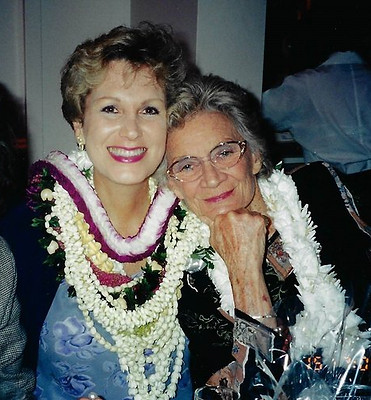
A Southern Root, a Hawaiian Bond
Veronica Gail was born and raised in the American South, growing up in North Carolina where her sense of family, tradition, and quiet strength first took shape. Though her roots remained there, her path led her westward and eventually, to Hawaiʻi.
It was in the islands that she met Abigail, introduced by a mutual friend. From their first meeting, a profound connection took hold, one built not on circumstance, but on shared values, laughter, and an abiding affection for the simple and sacred things: horses, heritage, and home.
“She is the love of my life,”Abigail would say often.
On October 1, 2017, they were married in a quiet ceremony befitting their nature. It marked not a beginning, but the public recognition of a bond long shared and deeply understood.
In the Circle of the Quarter Horse
They shared a deep passion for, and devotion to, the world of Quarter Horse racing. Unlike Thoroughbred racing, with its long-distance tracks, elaborate traditions, and emphasis on lineage, and endurance, Quarter Horse racing is defined by explosive speed, short sprints, and the practical demands of ranch life. It is a sport shaped by working horses and working people, where success is measured not by ceremony but by performance, instinct, and grit.
In California, they made their home in Lakeview, a community of breeders and trainers where Abigail focused on racing and Veronica on breeding. They were not figureheads in this world; they were deeply respected participants. Their names and more importantly, their horses were known and admired throughout the circuit.

Photo: Harry Benson
A Home in Nuʻuanu
In Honolulu, their home in Nuʻuanu was their sanctuary. It was a place of shade and stillness, of ʻauwai-fed streams and birdsong. The property carried with it a sense of timelessness where aliʻi protocol met private reflection.
Visitors often remarked that to sit with the two of them there was to be welcomed into another era. The conversations were rich with history, cultural kuleana, and personal reflection. Their home, like their relationship, was understated yet steeped in meaning.
In Public and In Private
Theirs was a partnership marked by dignity. In their many appearances at civic events, charity galas, royal commemorations they stood side by side.
They were strong, proud, independent, and fiery. Their love needed no explanation.
In the final chapter of Abigail’s life, it was Veronica who remained her constant not just as a caretaker, but as a quiet pillar of strength. Those who witnessed their bond in those final days understood that it was not obligation that carried them, but love.